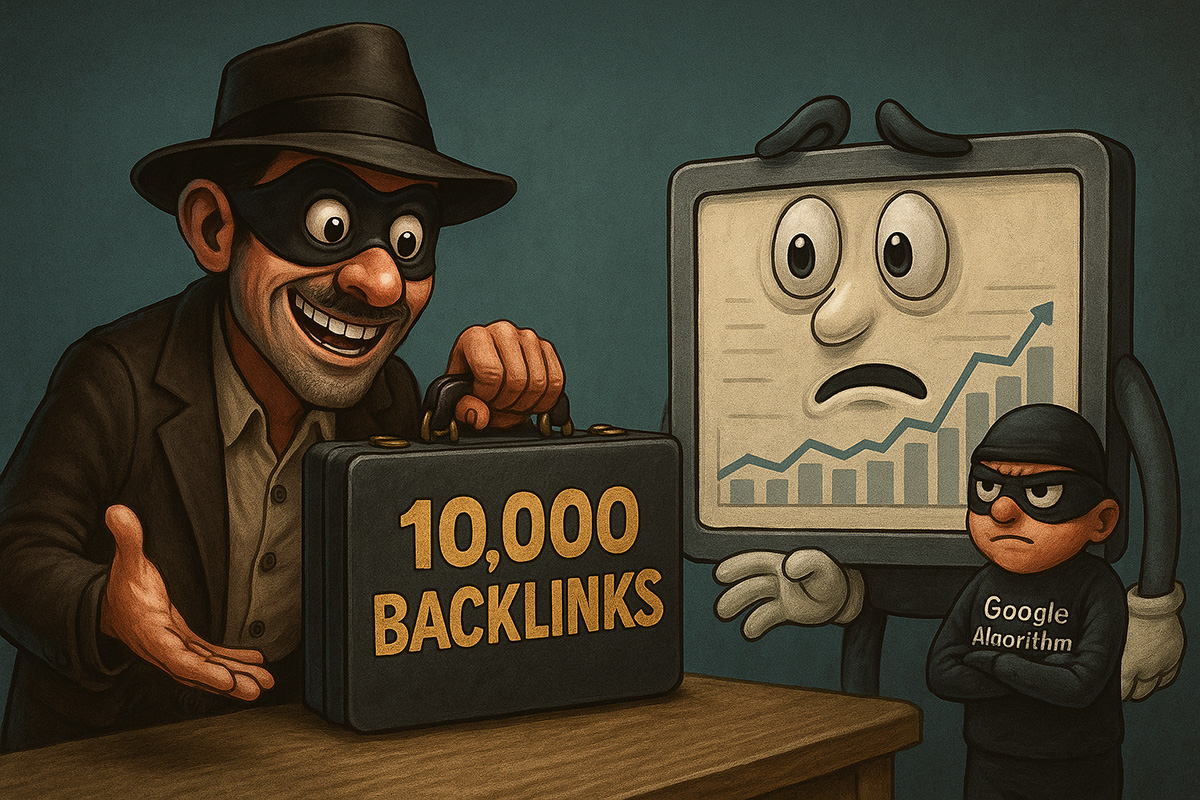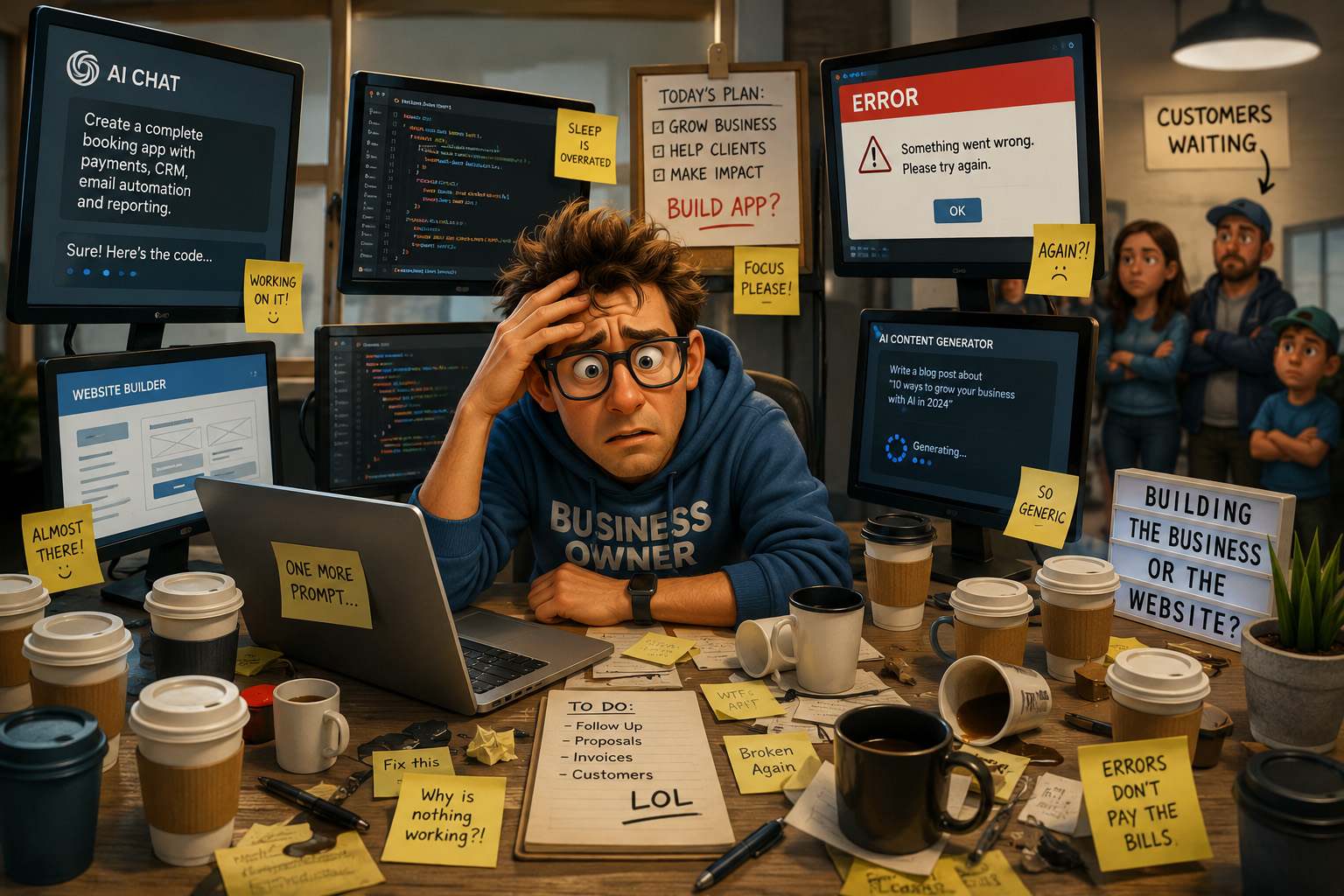
Artificial intelligence is changing the business world faster than most of us can keep up with. From instant website builders to AI-generated apps and automated content writing tools, small businesses are being told they can now do everything themselves — faster, cheaper, and without hiring professionals. While that sounds exciting on the surface, many business owners are discovering a frustrating reality: they’re spending more time fighting with technology than actually growing their business. Even worse, many AI-generated websites, blogs, and apps end up feeling generic, lifeless, and nearly identical to thousands of others online. In this article, we’ll explore why blindly chasing AI can become a costly distraction for small businesses — and how smart companies are learning to use AI as a tool instead of letting it become the business itself.
Let’s just say it out loud…
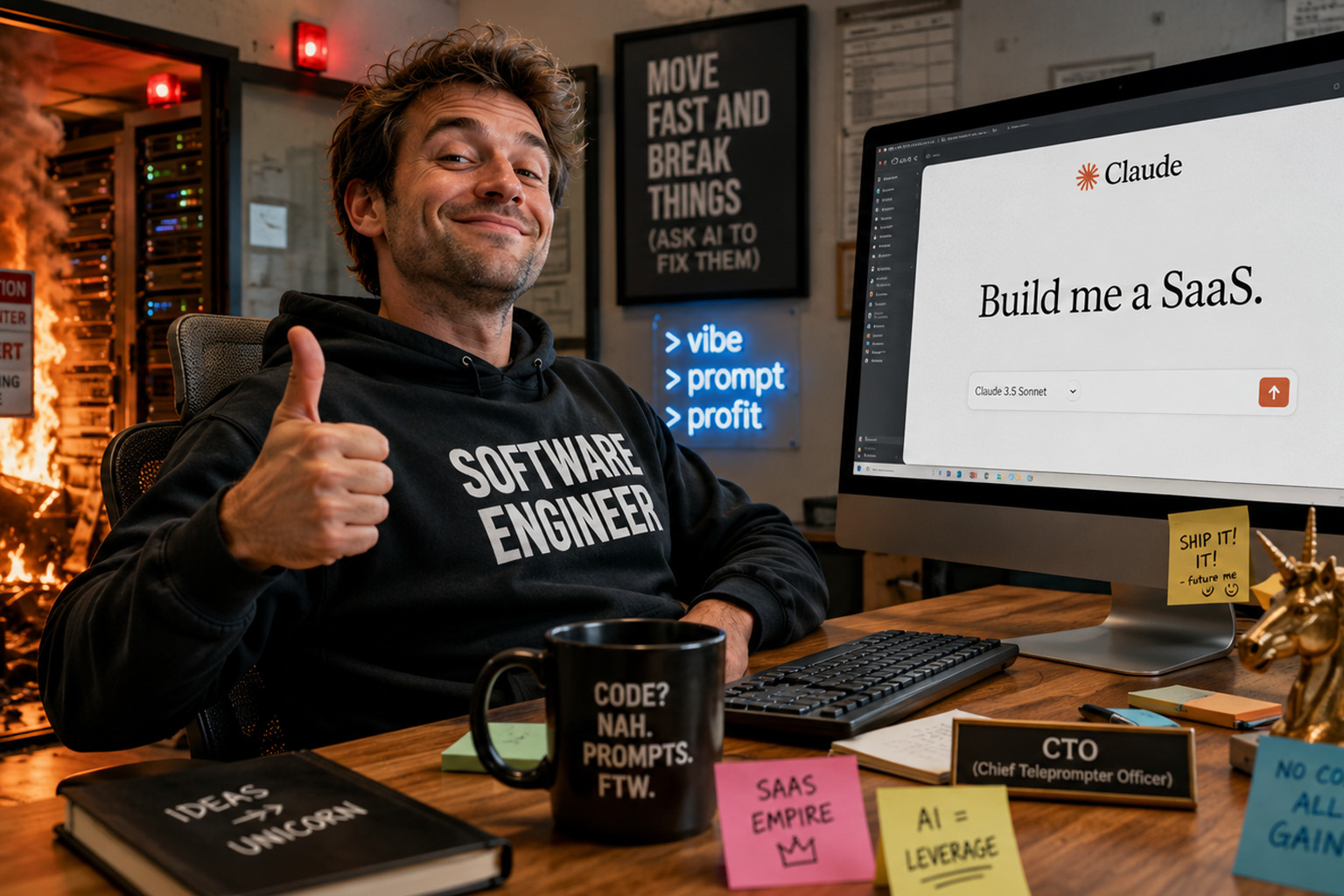
A lot of small business owners are currently one YouTube tutorial away from believing they’re the next tech startup founder.
Thanks to AI tools like ChatGPT, Claude, website builders, app generators, and “build-your-business-in-5-minutes” platforms, business owners everywhere are diving headfirst into software development like they just got recruited by Silicon Valley.
And honestly? I get it.
It’s exciting!
You type a few prompts, and suddenly AI spits out:
- A website
- A mobile app
- A CRM
- 20 blog posts
- A sales funnel
- A chatbot
- Half a nervous breakdown
The problem?
Most small businesses aren’t actually saving time.
They’re accidentally turning themselves into unpaid junior developers while their real business quietly sits in the corner wondering if anyone still remembers it exists.
The “I’ll Just Build It Myself” Era
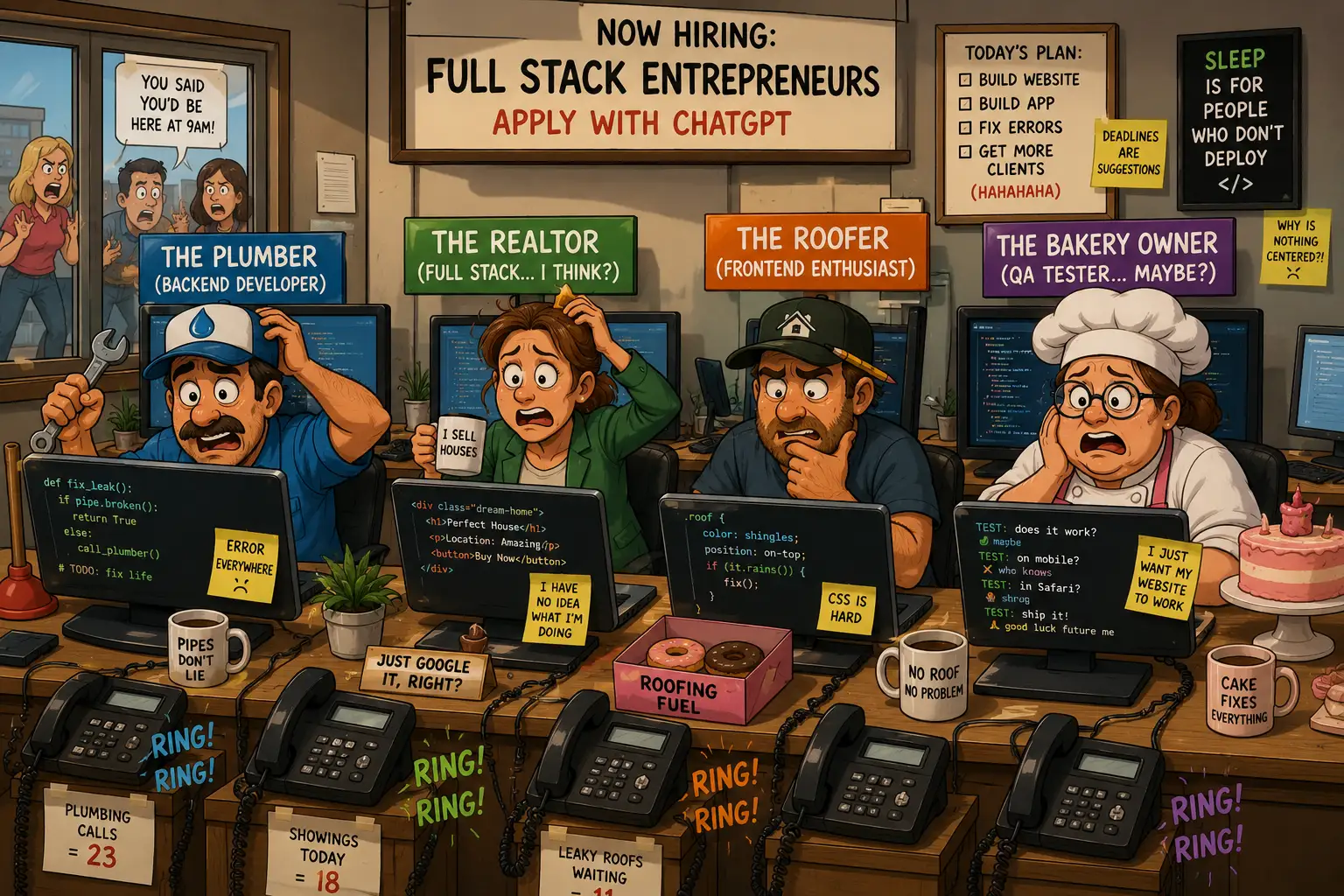
AI has made software development look deceptively easy.
Now suddenly:
- The roofer wants to build a SaaS platform
- The realtor is creating a custom CRM
- The chiropractor is debugging APIs at midnight
- The restaurant owner is watching “How to Deploy with Docker” tutorials while burning actual food
Again… I’m not knocking curiosity.
Learning technology is awesome.
But somewhere along the line, people started believing:
“AI generated code” = “professional software development.”
And those are not the same thing.
That’s like buying a stethoscope and announcing:
“Good news everybody… I’m basically a cardiologist now.”
Your family would immediately hide from you during Thanksgiving.
AI Is Amazing at Starting Projects
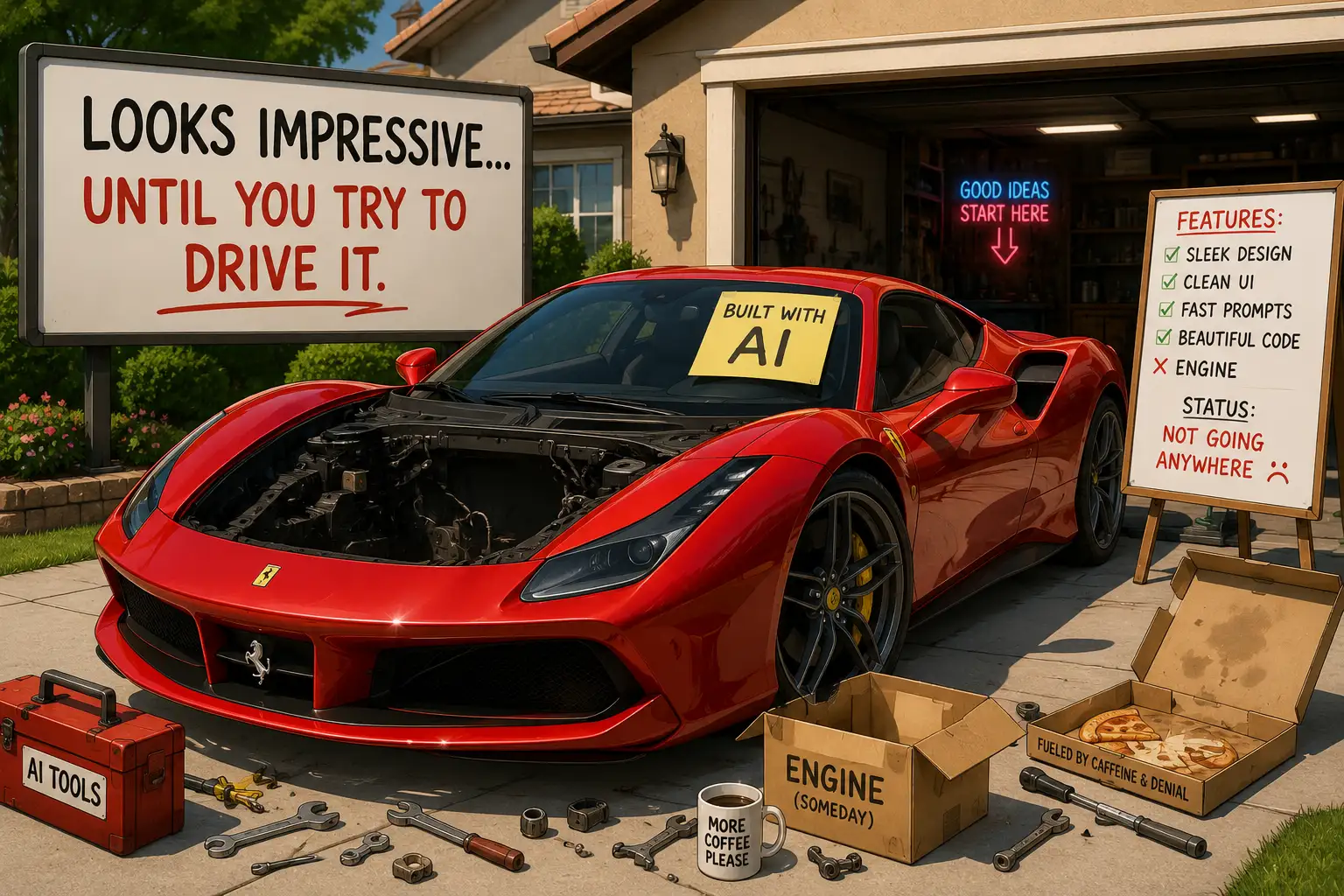
Here’s the truth nobody on LinkedIn wants to admit:
AI is fantastic at helping people start projects.
It’s incredible for:
- Brainstorming ideas
- Writing starter code
- Generating layouts
- Speeding up repetitive tasks
- Helping experienced developers move faster
But finishing a real-world business platform?
That’s where things get spicy.
Because eventually reality shows up carrying:
- Security problems
- Broken integrations
- SEO disasters
- Scalability issues
- Database nightmares
- User experience problems
- Random things exploding after updates
And suddenly the AI-generated “easy solution” turns into:
“Why does my website crash every time somebody uploads a JPEG?”
Welcome to software development.
We have snacks and emotional damage.
The Internet Is Starting to Feel Weirdly Generic
Have you noticed something lately?
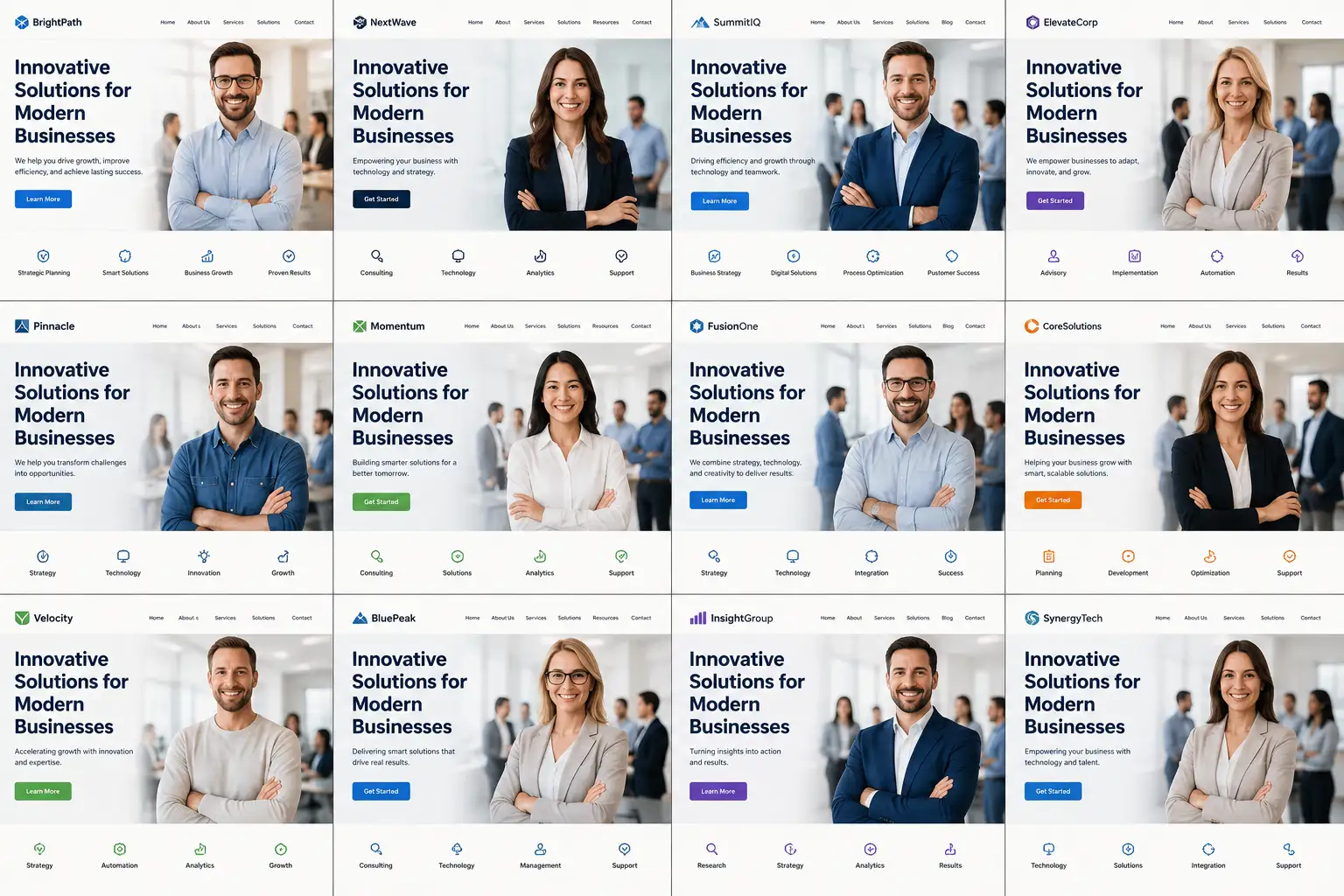
A lot of websites now feel exactly the same.
"Same layouts."
"Same robotic headlines."
"Same fake enthusiasm."
"Same AI-generated blogs titled:"
“10 Revolutionary Synergistic Business Strategies for Maximum Growth in 2026.”
That title alone sounds like it was written by a microwave wearing a necktie.
The problem is that AI tends to average everything out.
And businesses that rely too heavily on AI often lose:
- Personality
- Originality
- Authenticity
- Local flavor
- Emotional connection
Everything becomes polished…
…but weirdly lifeless.
Like a hotel lobby website.
Technically nice.
Emotionally empty.
The Biggest Cost Isn’t Money
The real cost of chasing AI isn’t usually the subscription fees.
It’s the distraction.
Small business owners already wear enough hats:
- Sales
- Customer service
- Marketing
- Operations
- Scheduling
- Accounting
- Hiring
- Problem-solving
Now add:
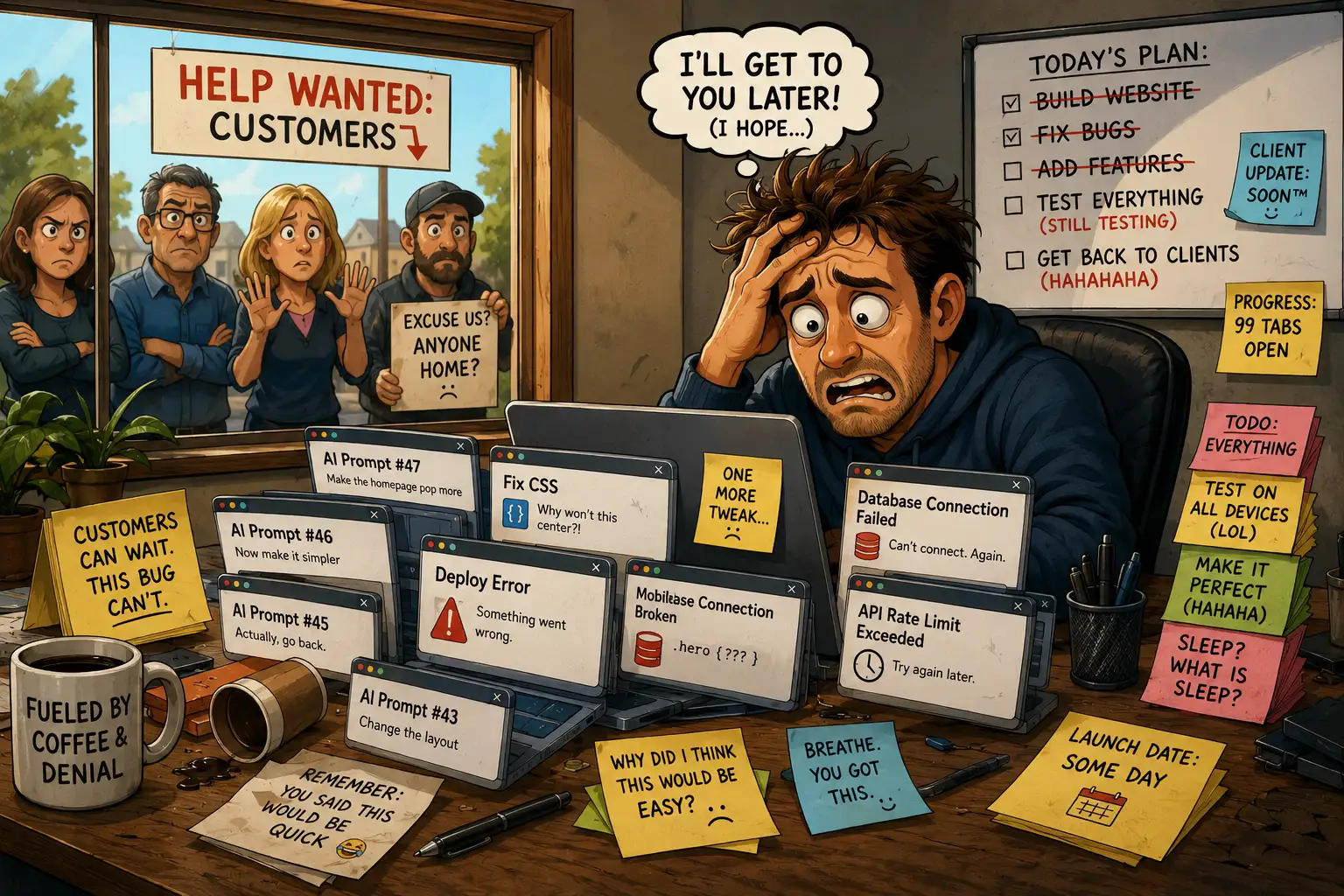
“Part-time software engineer with zero sleep.”
That’s where things start falling apart.
I’ve seen business owners spend:
- 6 hours tweaking prompts
- 3 weeks rebuilding their website
- Months trying to create apps they’ll never launch
- Entire weekends fixing problems AI created in the first place
Meanwhile:
- Customers aren’t being followed up with
- Sales calls are delayed
- Marketing consistency disappears
- The actual business starts slowing down
The business owner feels productive…
…but they’re busy building tools instead of building revenue.
The Smart Businesses Are Using AI the Right Way
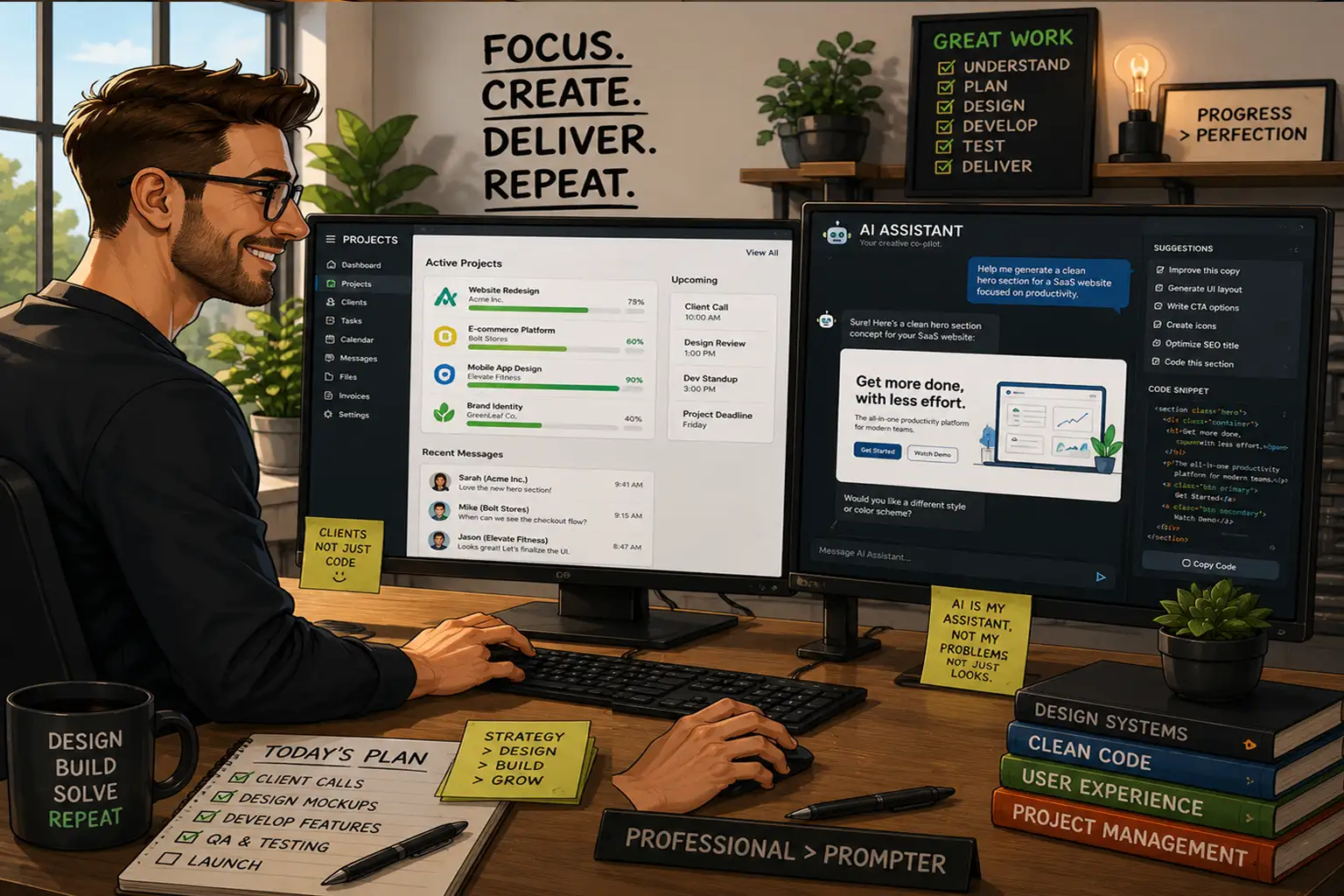
The companies winning right now are not replacing humans with AI.
They’re using AI as an accelerator.
That’s the sweet spot.
Experienced marketers, developers, designers, and business owners are using AI to:
- Save time
- Increase efficiency
- Handle repetitive tasks
- Brainstorm ideas faster
- Move projects forward quicker
But they’re still relying on:
- Human strategy
- Real-world experience
- Creativity
- Personality
- Business understanding
Because no matter how advanced AI becomes…
People still buy from businesses they trust.
And trust still sounds human.
Final Thoughts
AI is absolutely changing the business world.
And honestly?
That’s not a bad thing.
But small businesses need to stop believing they have to become software companies overnight just because AI made coding look easier.
"Sometimes the smartest move isn’t spending 4 months trying to build your own app at 2:00 AM while watching tutorials from a guy named “CryptoNinjaDev420.” "
Sometimes the smartest move is focusing on what actually grows your business:
- Your customers
- Your service
- Your reputation
- Your relationships
- Your brand
Use AI wisely.
Let it help you.
But don’t let it distract you from the reason you started your business in the first place.
Because at the end of the day…
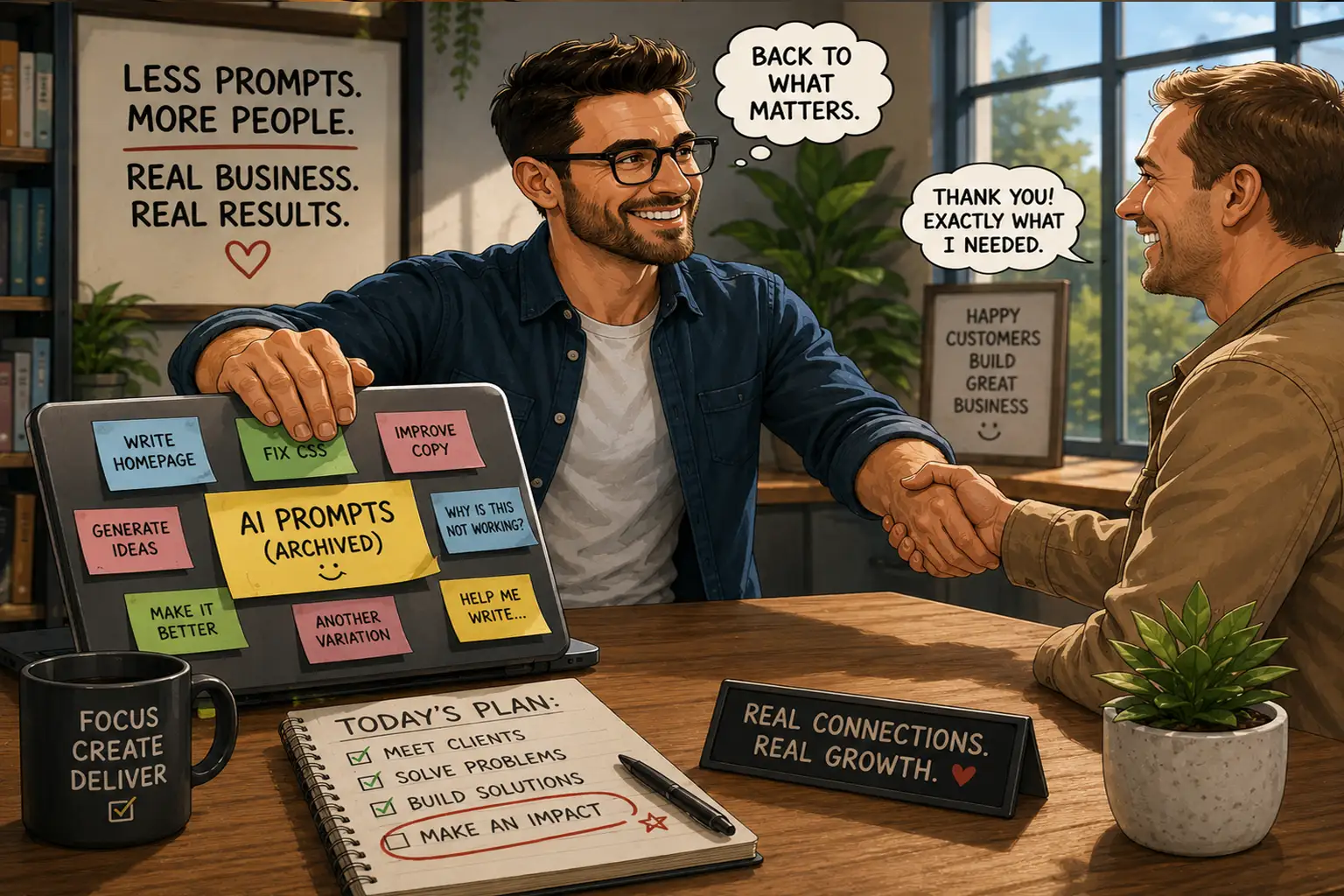
Nobody hires a company because its AI-generated blog used the word “synergy” seventeen times.
They hire people they trust.